
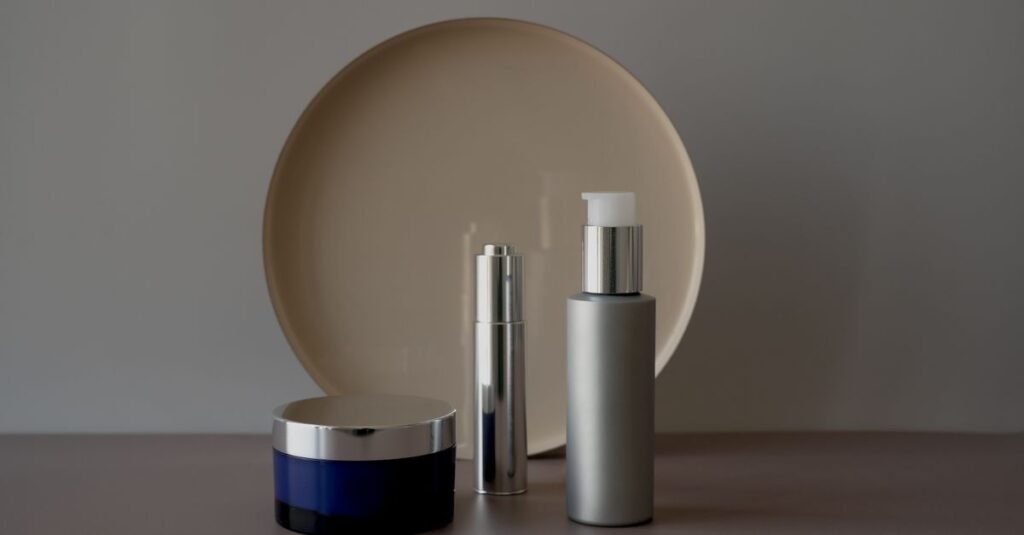
It’s 7am, I’m already at the vanity, and my skin is doing that flat, tired thing — the kind that no highlighter fixes. I’ve sat across from enough ‘skincare experts’ in my career to know this isn’t a serum problem. It’s a routine problem. Your skin is stressed, and it’s telling you so.
What ‘stressed skin’ actually means
‘Stressed skin’ has crept into a lot of conversations lately, and it’s not a marketing invention. Tight schedules, poor sleep, long screen time, blue light exposure, pollution — the daily grind lands on your barrier first.
The skin barrier is the structure that keeps the moisture in and the aggressors out. Research published in the International Journal of Dermatology links psychological stress and sleep deprivation directly to skin imbalance. When the barrier weakens, the skin loses its ability to protect itself and hold onto water. What you see in the mirror — dryness, redness, sensitivity, breakouts — is the barrier asking for help.
It’s not about over-cleansing or the wrong foundation. It’s about everything else you do while you’re not looking at a skincare ad.
Your skin has a schedule. You’re missing it.
Here’s the detail most routines ignore: skin runs on its own biological clock. During the day, its job is defense — blocking pollution, UV radiation, and the general chaos of the outside world. At night, it switches to repair mode and regenerates cells at a far higher rate.
This is the circadian cycle, the same rhythm that governs most of your body’s functions. Skip sleep, work odd hours, or push through the night on caffeine, and that repair window shrinks. Over time you get the visible signs: more sensitivity, more dullness, more of that ‘tired’ look no amount of concealer can hide.
I’m not telling you to sleep like a baby. I’m telling you that 11pm-to-7am beats 1am-to-9am for your skin, and your barrier can tell the difference.
Why the barrier matters more than you think
A healthy barrier does two jobs: it prevents excessive water loss, and it stands between your skin and everything the outside world throws at it — pollutants, microorganisms, harsh weather. Dermatologists now put barrier protection at the top of their recommendations, and for good reason.
When it’s compromised, the signs are predictable:
- Frequent dryness
- Tightness, especially after washing your face
- Redness and reactivity
- Dull, flat-looking skin
- More breakouts and flare-ups than usual
If you recognize yourself in two or more of those, the problem is likely structural, not cosmetic.
Antioxidants: the part your routine is probably missing
Dermatology has leaned hard into protecting skin from daily aggressors, and antioxidants are the most studied tool in that kit. Free radicals — generated by pollution, UV radiation, and everyday oxidative stress — damage barrier cells over time. Antioxidants help neutralize them.
Used consistently alongside a solid routine, they help strengthen the barrier and soften the wear and tear of a full life. I look at a formula the way I used to look at a byline: I want to know what’s actually doing the work, and whether there’s enough of it to matter.
How to stop stressing your skin
You can’t remove every external factor. You can stop stacking new ones on top. The moves that actually hold up:
- Keep a regular sleep schedule — the repair window is non-negotiable
- Hydrate properly. Water, and a moisturizer that actually seals it in
- Wear sunscreen every single day, even when you’re ‘indoors’
- Choose products that support the barrier, not just ones with a good ad
- Ask your dermatologist before layering in new actives
None of these are glamorous. All of them work. Small, consistent changes beat a hero product you only remember to use on weekends.
The Edit
If you do only one thing from this article: protect the barrier. A good moisturizer, daily SPF, and a consistent sleep schedule will outperform any single ‘hero’ serum. That’s the edit. The rest is optional.
FAQ
How do I know if my skin is actually stressed? Look for the pattern: persistent dryness, tightness, redness, and breakouts that don’t follow a clear cause. If it’s chronic, it’s the barrier.
Does screen time really affect my skin? It’s one of several environmental stressors, not the main one. UV and pollution hit harder. But long hours of blue light exposure add to the load, and so does staying up late to scroll.
Do I need a dermatologist to start fixing this? No — the basics (sleep, hydration, daily SPF) work without one. See your dermatologist if the redness or breakouts persist, or before adding new active ingredients.
A note from the editor
I used to think skincare was about adding more. Eight steps, five serums, a ‘ritual.’ Turns out my skin was never missing a product — it was missing sleep, water, and a barrier that hadn’t been bulldozed by everything else. Fix the routine first. The shelf can wait.
Less shelf, more glow. — Amelie