
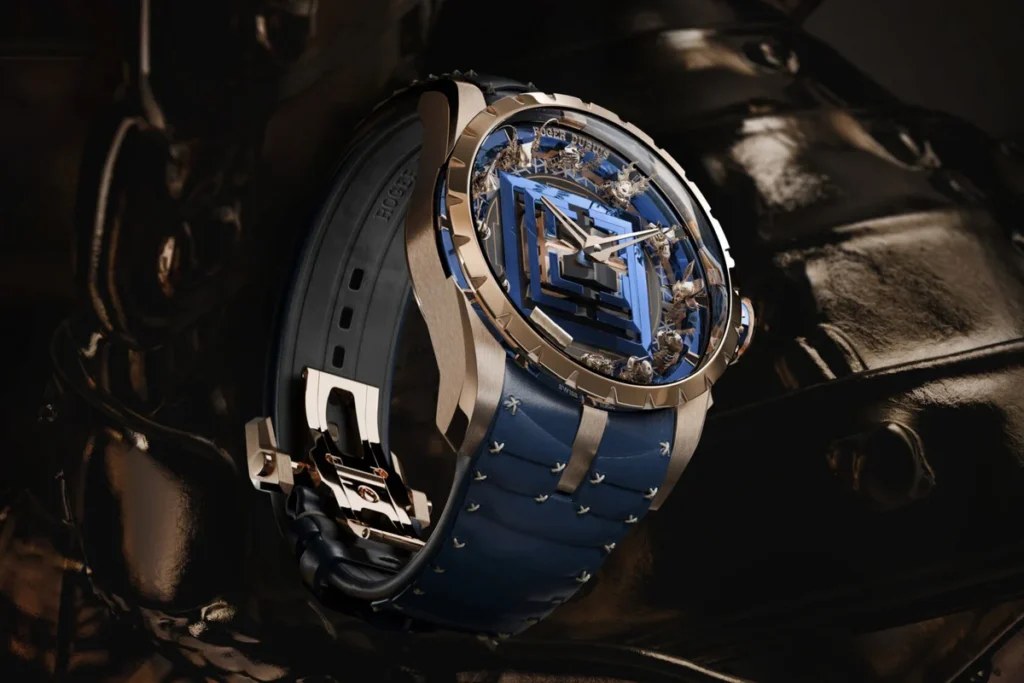
My vanity holds exactly three things that cost more than my car: a perfume I’ve been repurchasing for years, a cream I’d defend in a court of law, and one watch I never wear but always photograph. The new Roger Dubuis Excalibur The Kabuto Legacy is making me think about adding a fourth slot. Or rearranging my priorities.
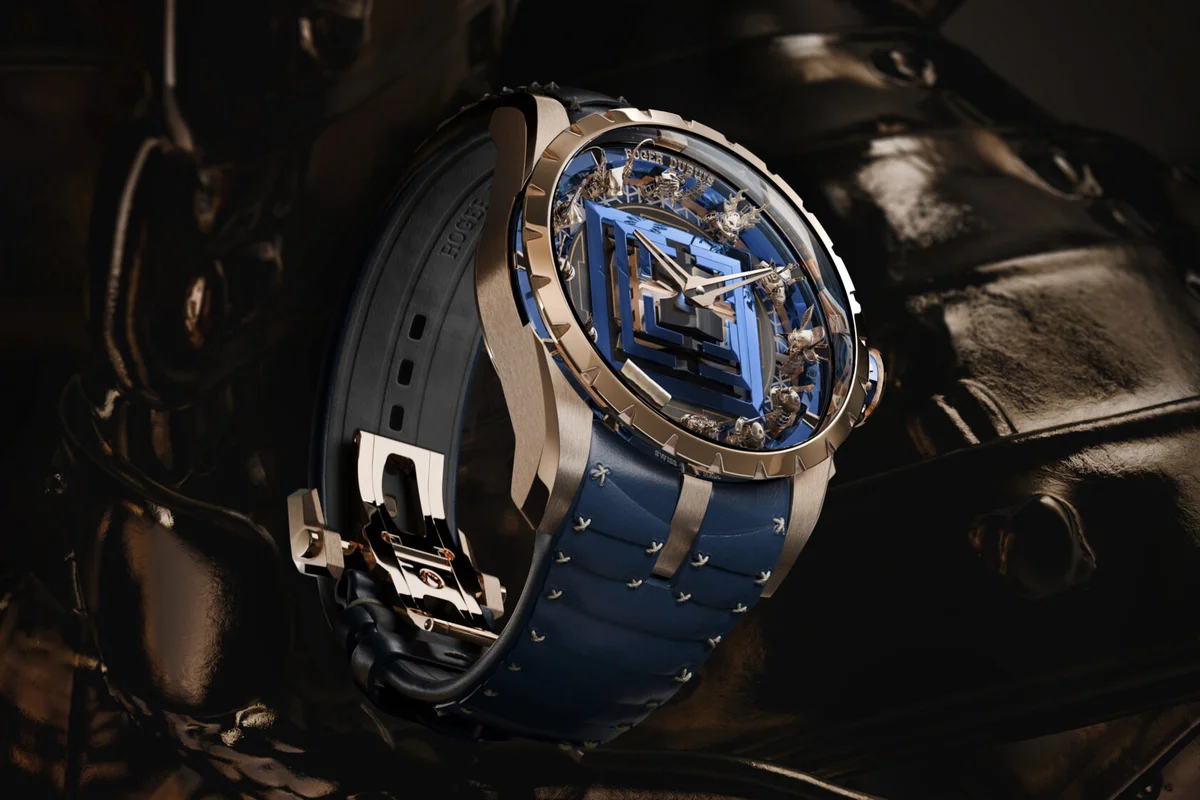
If you follow watches at all, you know Roger Dubuis is the brand that never plays it safe. Their releases land like a text from an unpredictable friend — you’re not always sure what’s coming, but you’re always glad it’s there. This one? It takes their famous Knights of the Round Table series and sends it across the ocean to Japan.
From Arthur’s Court to the Tokugawa Shogunate
The Excalibur collection started in 2005 with a bold case shape and skeletonized movements — a fresh start for the brand. In 2013, the Knights series arrived: limited to 28 pieces, each with 12 hand-engraved knights around the dial, swords drawn toward the center. A little theatrical? Sure. A little addictive? Absolutely.
For years the series stuck with European fighters — knights, legends, the usual Arthurian cast. (One Chinese Zodiac edition broke the pattern in 2021.) Now, The Kabuto Legacy brings in samurai. Not as a side nod. As the whole point.
The Dial: Twelve Samurai Helmets, One Tiny Castle
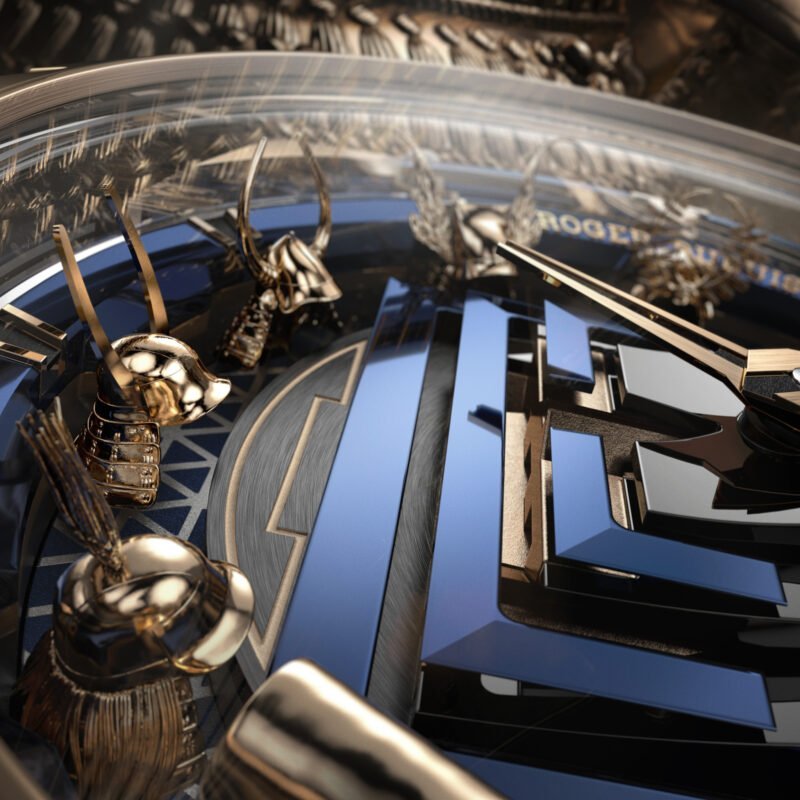
Here’s where I stop being a casual observer and start squinting. The 45mm 18K pink gold case doesn’t use traditional hour markers at all. Instead, each hour position holds a hand-sculpted kabuto — a samurai helmet. Traditionally these weren’t just armor; they were identity marks. In battle, you identified your commander by the ornament on his helmet. Now the 12 o’clock position holds Tokugawa Ieyasu, the shogun who unified Japan in the early 17th century, his helmet marked with a fern for prosperity and longevity. The Four Heavenly Kings of the Tokugawa sit at 1, 2, 4, and 9 o’clock, surrounded by other figures from that era.
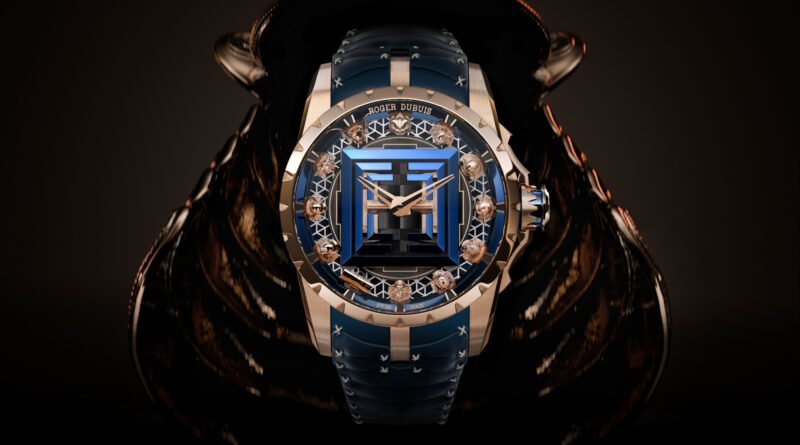
Each helmet took two to three days of micro-sculpting and hand-engraving. Two to three. Days. For a piece smaller than your thumbnail. The dial’s center is an abstract interpretation of Edo Castle in a deep indigo blue — the dye traditionally used for samurai garments — built up layer by layer with polishing, circular brushing, and shot-blasting to give every architectural element its own texture.
Underneath the Art
It’s easy to get lost in the helmets and forget this is still a watch. Under the dial sits the RD821 self-winding caliber, finished with 14 distinct techniques and carrying the Poinçon de Genève certification — Geneva’s stamp that the finishing and mechanical performance meet the brand’s own exacting standards.
The Edit
My pick for anyone who collects “the one watch that tells a story”: The Kabuto Legacy. It’s not a watch you buy to match an outfit. It’s a watch you buy because the story on it is one you can’t tell any other way — 12 samurai commanders from Japan’s unification, each helmet individually sculpted in pink gold, orbiting a miniature Edo Castle. Limited to 28 pieces. Pricing is upon request, which in watch-speak means: bring your patience and your budget.
Worth It or Skip It
Worth it — if you already own your “one splurge” slot. This is not a first watch. It’s not a daily driver. It’s the piece that lives in a drawer and gets pulled out when you want to show someone what patience and craft actually look like. If your collection doesn’t have room for one piece that’s more sculpture than timepiece, skip it — you’re not ready yet. If you do? This is the one.
Frequently Asked
How many were made? 28 pieces, same limit as the original Knights of the Round Table series that started this whole line in 2013.
How much does it cost? Pricing is upon request. In the world of haute horlogerie, that means the price lives in a conversation, not a price tag. Expect it to sit comfortably in the “I need to sit down for this number” category.
Who is this for? Collectors who want a watch that’s more art object than accessory. People who’ve already decided that a watch’s job isn’t just to tell time.
A note from the editor: I’ve spent years editing product stories that try too hard to sound human. This one earns its place because the story is genuinely there — not added as marketing, but built into the metal, one helmet at a time. Sometimes the most honest luxury is the kind that takes three days to make a single hour marker.
Less shelf, more glow.