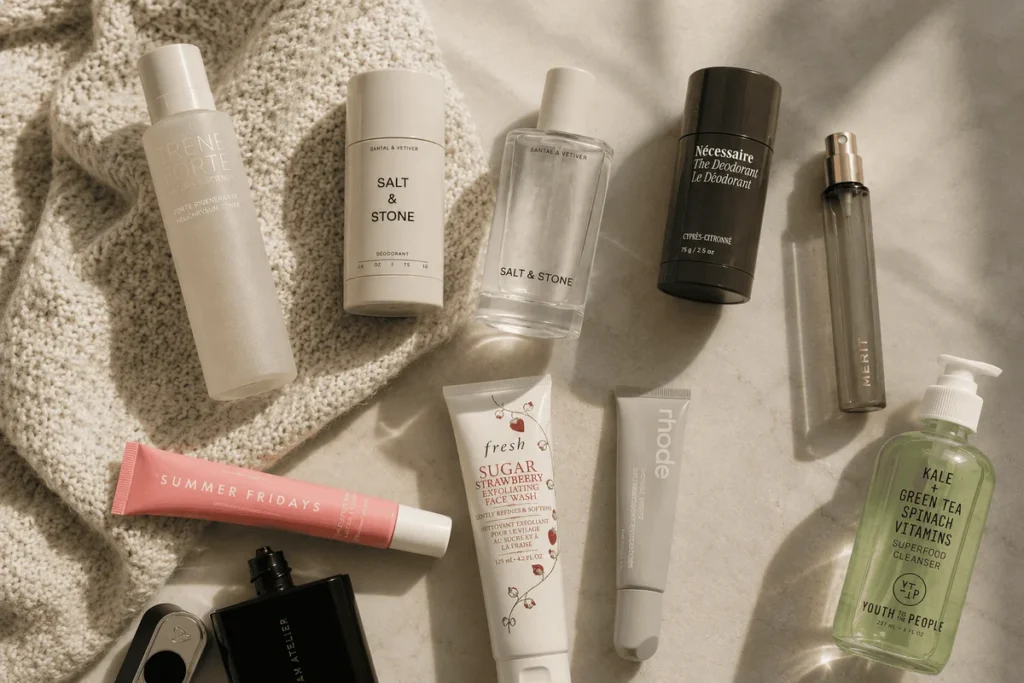
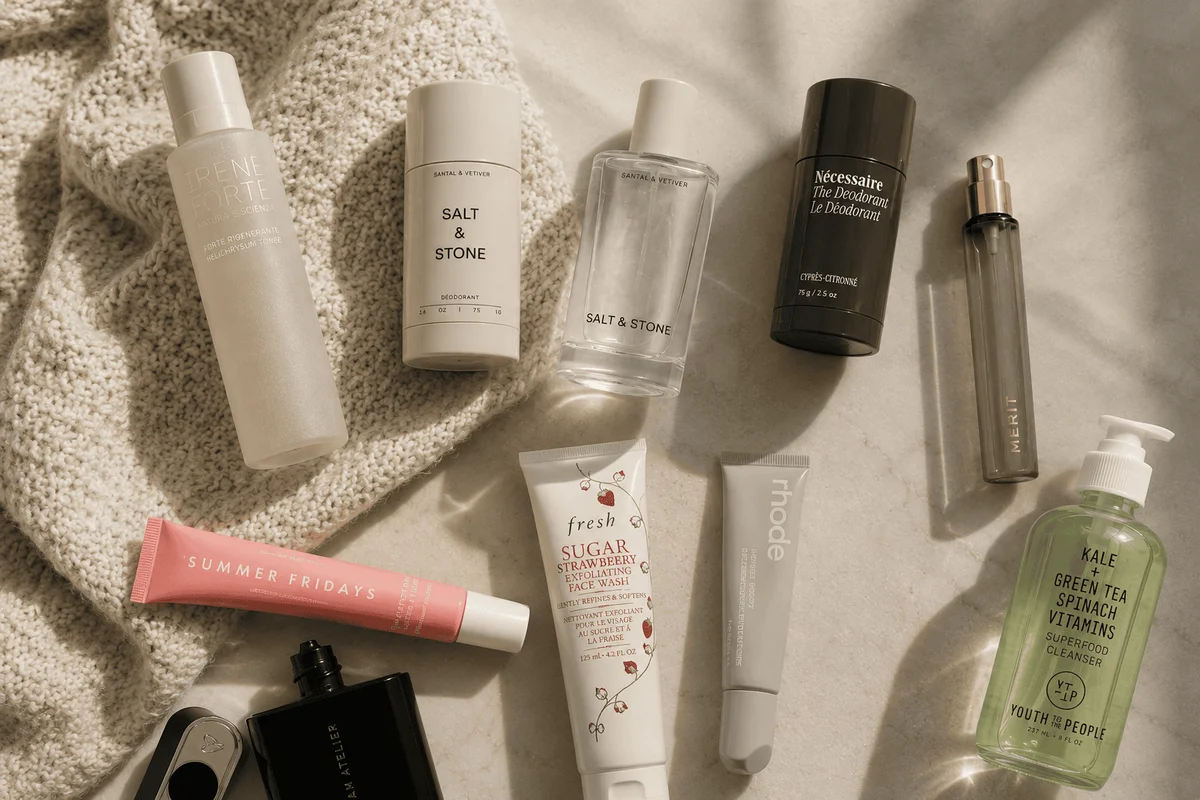
I was doing a spring reset of my bathroom shelf — the kind where you pull everything off and keep only what earned its place — and I did what I always do: flipped the bottles over. That’s when it hit me again. So many of these brands are selling themselves on being clean, and the back of the bottle tells a completely different story.
So I checked the labels of 10 of the most popular ‘clean’ beauty brands. Would you believe it — all 10 still add synthetic fragrance to their formulas. And here’s the part almost no one tells you: ‘clean’ is not a regulated word. Most clean beauty retailers set the bar lower than you think.
 ” alt=”Bathroom shelf with clean beauty skincare products being sorted” />
Why I Avoid Fragrance
‘Fragrance’ or ‘Parfum’ is one word that can legally hide thousands of undisclosed chemicals. Brands don’t have to tell you a single one of them, because fragrance is protected as a trade secret. And what’s often hiding inside? Phthalates — hormone disruptors linked to fertility issues, thyroid problems, and metabolism. They now show up in over 95% of people tested. On most perfumes, fragrance is the second ingredient on the list.
So when a brand builds its whole identity around being clean and still drops synthetic fragrance into the formula, that’s the gap I look for — the distance between who they say they are and who they actually are. The front of the bottle says one thing. The back says another. We call that greenwashing.
What Greenwashing Actually Is
Greenwashing is when a brand uses words like ‘clean,’ ‘natural,’ ‘green,’ or ‘non-toxic’ to make a product look safe without being held to any real standard. Some brands lean on packaging too — green leaves and leafy botanicals that make you think: clean! But ‘clean’ has no legal definition. ‘Natural’ has no legal definition either. A brand can print both words on the front of the bottle while synthetic fragrance, silicones, and petroleum-based ingredients sit right inside. No one is checking. No one is stopping them.
Even if you shop at your favorite clean retailer, the questionable stuff still makes it through the door. Flip every bottle over, and scan for these.
Ingredients to Watch For
Fragrance / Parfum. The number one thing hiding in ‘clean’ products — the trade-secret word that can legally conceal phthalates and a host of other undisclosed chemicals. If it’s the second ingredient, you know how much is in there.
Phenoxyethanol. A synthetic preservative the FDA warned about in 2008 — it could depress a baby’s central nervous system if ingested, say, from a nipple cream. It’s also a known skin irritant and allergen.
Lake dyes. Synthetic colorants, often petroleum-derived, that can carry trace heavy metal impurities like lead and arsenic from manufacturing — which is why the FDA legally limits heavy metals in them. They do one thing: add color. Zero skin benefit.
Silicones. Anything ending in -cone, -siloxane, -silylate, or -silsesquioxane. They form a plastic-like seal over your skin that can trap buildup and bacteria underneath.
PEGs (polyethylene glycols). Processed with ethylene oxide, a known human carcinogen, which can leave behind contaminants like 1,4-dioxane — a probable carcinogen the FDA has flagged in personal care products. The contamination is the real risk, not the PEG itself.
Parabens. Synthetic preservatives that mimic estrogen in the body and have been detected in breast tumor tissue. That detection doesn’t prove they cause cancer — but it’s exactly why the EU has banned several parabens and restricted the rest.
Petroleum-derived ingredients. Can be contaminated with PAHs, classified as carcinogenic, unless they’re fully refined — and the label never tells you which yours is. You’re trusting a byproduct of crude oil refining to be clean, with no way to verify it.
Plastics and acrylates. Plastic added for texture and film that doesn’t break down. They wash into waterways and are now being found in human blood, placentas, and breast milk.
The Edit
My pick isn’t a product — it’s a habit. Flip every bottle over before it goes on your shelf, and if you can’t pronounce the second ingredient, put it back. Your routine should be a capsule wardrobe, not a hoard of marketing promises.
Worth It or Skip It: Worth your 30 seconds, every single time. The label never lies — even when the marketing does.
FAQ
Is ‘clean beauty’ a regulated term? No. Neither ‘clean’ nor ‘natural’ has a legal definition in personal care, so brands can use them freely regardless of what’s actually in the formula.
Why do brands hide fragrance ingredients? Fragrance is protected as a trade secret, so a single word can legally conceal thousands of undisclosed chemicals — including phthalates, hormone disruptors found in over 95% of people tested.
Should I stop buying from clean beauty retailers? Not necessarily — just audit. Most clean retailers set a real but low bar, so the same questionable ingredients (fragrance, silicones, PEGs, parabens) still show up. Read the back label and decide for yourself.
A note from the editor: I’ve read enough ingredient lists to know the front of the bottle is the ad. The back is the truth. Read that one.
Less shelf, more glow. — Amelie